

Workshop
Aulkiak
09 01 2027
13 02 2027
The architect Martín Domínguez, throughout his life, managed to revive the theatrical roots of drama and comedy through his cinema projects. At the family workshop Aulkiak, through a range of playful activities and collaborative construction exercises, we will revisit this architecture of performance and image, from the earliest open-air Greek theatres to the cinemas of the 1950s.
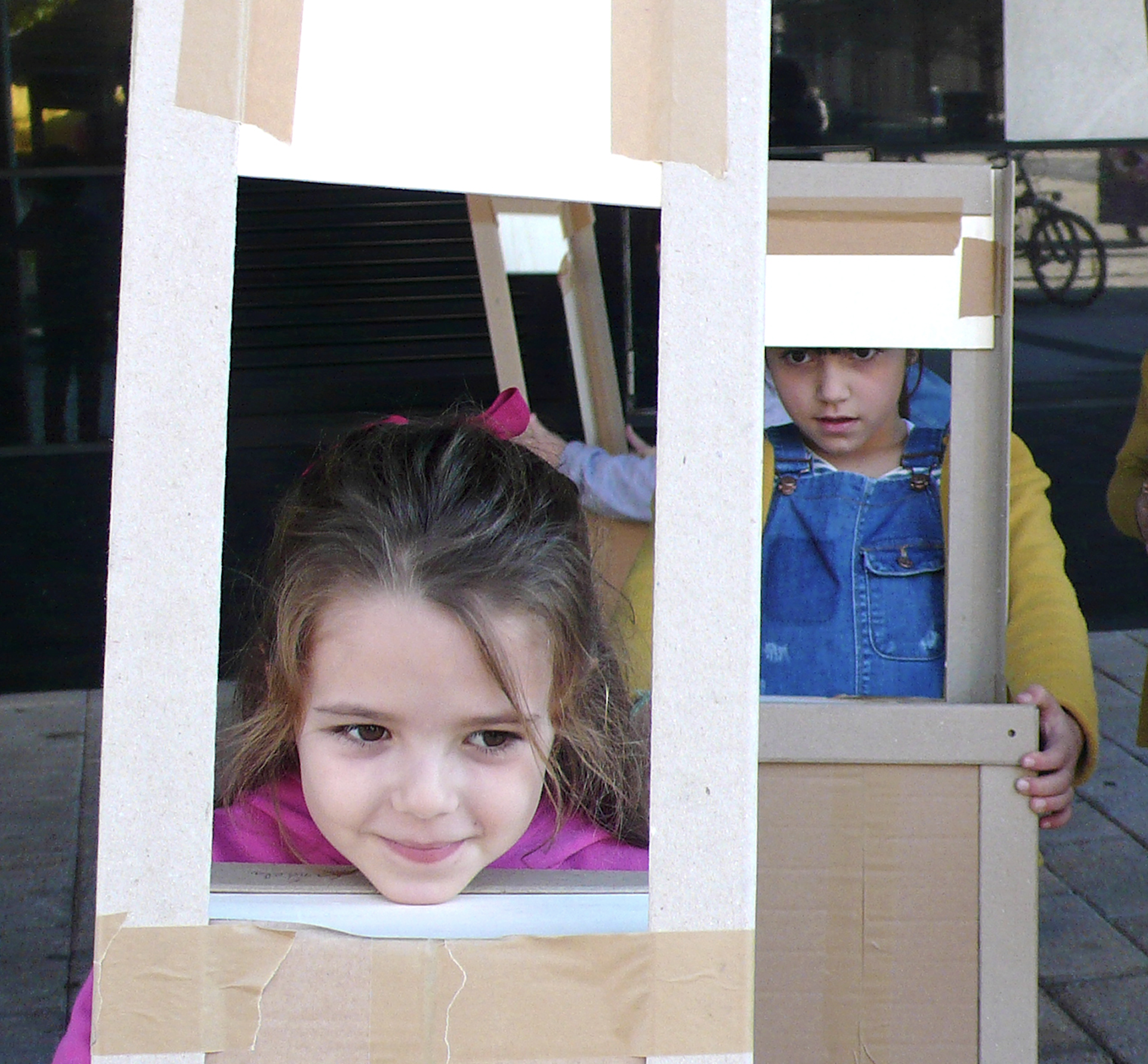
The architect Martín Domínguez, throughout his life’s journey, managed to reclaim the theatrical roots of drama and comedy through his cinema projects in Havana, such as the striking Radio Centro and the open-air Marianao Amphitheatre. In the latter, the stage is defined by one of those slender, undulating concrete shells for which he was praised and recognised in Spain before being forced into exile.
At the family workshop Aulkiak, through a range of playful activities and collaborative construction exercises, we will revisit this architecture of performance and image, from the earliest open-air Greek theatres to the cinemas of the 1950s.
On the Historical Configuration of Theatre
Theatrical performances, which could last for several days, began with a sacrifice at the altar in honour of Dionysus. Audiences enjoyed performances that revolved around the two opposing poles of life, embodied in the masks of drama and comedy.
Over time, theatre evolved from these open-air configurations into enclosed spaces, no longer at the mercy of the weather. From the Theatre of Epidaurus, which made a somewhat naive attempt to preserve its connection with the outdoors by painting cloudy skies on ceilings and creating stage backdrops with trompe-l’œil street scenes, theatre eventually evolved into today’s stage spaces. The versatility of modern auditoriums now allows them to host an almost endless variety of events, including concerts, poetry recitals, film screenings and other forms of entertainment for audiences seated in upholstered chairs, rather than on the exceptional stone tiers of ancient Greek theatres.